Skip to content
 Many buyers worry that a sauna will quietly increase electricity bills over time. This concern is common among hotel groups, developers, and private buyers who must control long-term operating costs.
A sauna uses a measurable and stable amount of electricity. Actual consumption depends on heater type, insulation quality, cabin size, and usage habits—not on myths or assumptions.
This guide explains exact kWh usage, realistic monthly costs, and real-world examples so you can judge whether a sauna makes sense for your project or home.
Quick practical takeaways:
- Most modern saunas use predictable electricity levels
- Heater type and session length matter more than brand
- Saunas usually consume less power than hot tubs
- Real costs are often lower than expected when usage is controlled
How Much Electricity Does a Sauna Really Use Per Hour?
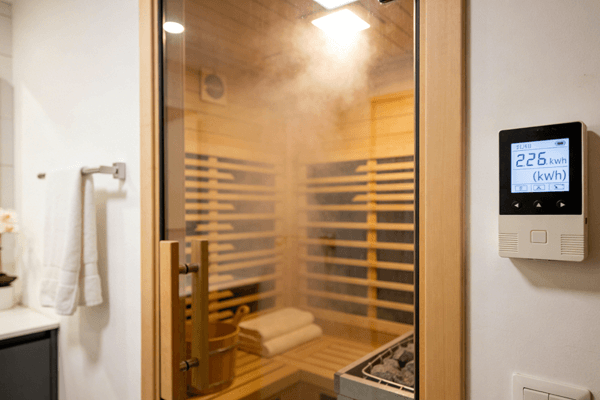
Many people believe a sauna consumes extreme power every time it is turned on. This misunderstanding appears frequently during early sourcing discussions.
In reality, most modern saunas consume between 1.5 and 9 kWh per hour depending on design and usage conditions. This range covers both infrared and traditional electric saunas used under normal conditions.
How many kWh does a traditional electric sauna consume?
A traditional electric sauna1 uses resistance heaters to warm stones and air. Heater size is matched to cabin volume.
| Sauna Size | Heater Power | Average Hourly Use |
|---|---|---|
| 1–2 person | 3–4.5 kW | 3–4.5 kWh |
| 3–4 person | 6 kW | 5–6 kWh |
| 5–6 person | 8–9 kW | 7–9 kWh |
During the initial heat-up phase, power usage is higher. Once target temperature is reached, the heater cycles on and off. In real use, average consumption is usually lower than the rated heater power.
How much electricity does an infrared sauna use per hour?
Infrared saunas2 heat the body directly instead of warming the air.
| Infrared Type | Rated Power | Hourly Consumption |
|---|---|---|
| Small cabin | 1.5–2 kW | 1.5–2 kWh |
| Medium cabin | 2–3 kW | 2–3 kWh |
| Large cabin | 3–4 kW | 3–4 kWh |
Infrared saunas require little preheating. Power usage remains stable throughout the session, making them suitable for homes with limited electrical capacity.
Is sauna electricity usage higher than a hot tub or steam shower?
Many buyers compare sauna energy use with other wellness equipment.
| Equipment | Hourly Electricity Use3 |
|---|---|
| Traditional sauna | 4–8 kWh |
| Infrared sauna | 1.5–3 kWh |
| Steam shower | 6–9 kWh |
| Hot tub | 7–15 kWh |
A sauna typically consumes less electricity than a hot tub and often less than a steam shower, especially when session time is controlled.
How Much Does It Cost to Run a Sauna Per Month?
Electricity cost depends on both consumption and local energy prices.
A sauna usually adds a predictable and manageable amount to monthly electricity bills4.
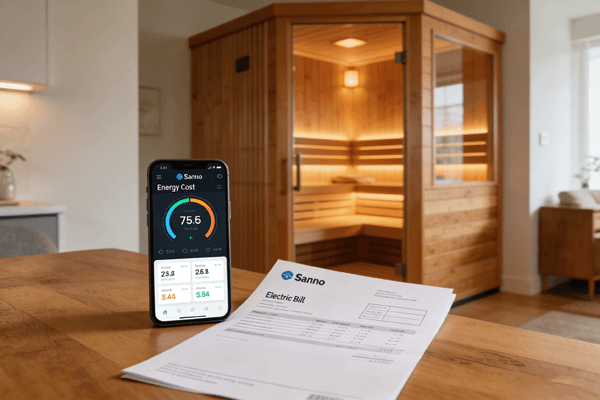
What is the average monthly electricity cost of a home sauna?
I often calculate this with buyers during early planning.
Example:
- 6 kW sauna
- 4 sessions per week
- 1 hour per session
Monthly use is about 24 hours.
| Item | Value |
|---|---|
| Monthly kWh | 144 |
| Cost at $0.15/kWh | $21.60 |
Infrared saunas under the same usage often stay below $10 per month.
How does electricity price affect sauna operating cost by country?
Electricity pricing changes the result significantly.
| Country | Avg. Price per kWh | Monthly Cost |
|---|---|---|
| USA | $0.13–0.17 | $18–25 |
| Canada | $0.10–0.14 | $14–20 |
| Germany | $0.35–0.45 | $50–65 |
| UK | $0.30–0.40 | $43–58 |
This is why many European clients choose higher insulation and efficient heaters5 from suppliers like HOLIE.
Is a sauna expensive to run compared to other home appliances?
A sauna is not always running.
| Appliance | Monthly Cost |
|---|---|
| Refrigerator | $10–15 |
| Dryer | $20–30 |
| Sauna | $15–30 |
| Air conditioner | $30–60 |
A sauna often costs less than cooling systems.
What Factors Increase or Reduce Sauna Electricity Consumption?
Two saunas with the same heater may consume very different amounts of electricity.
Construction quality6 and control systems matter as much as heater size.
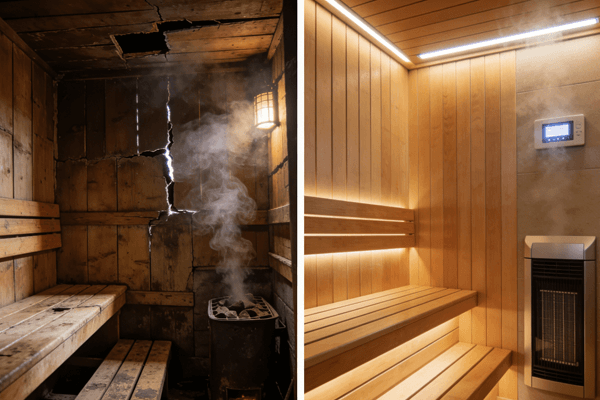
Does sauna size and insulation affect power usage?
Insulation controls heat loss.
| Insulation Level | Energy Impact |
|---|---|
| Poor | High |
| Standard | Medium |
| High | Low |
Better insulation7 reduces heater runtime and stabilizes temperature.
Does preheating time increase electricity consumption?
Longer preheating uses more power. Modern heaters and sealed cabins shorten heating time and reduce waste.
How does usage frequency change total energy cost?
Frequent use increases total cost but may reduce cost per session. Warm structures retain heat between sessions, especially indoors.
Which Type of Sauna Uses the Least Electricity?
Energy efficiency depends on how heat is delivered.
Infrared saunas8 consume the least electricity per session, but traditional saunas deliver a different experience.
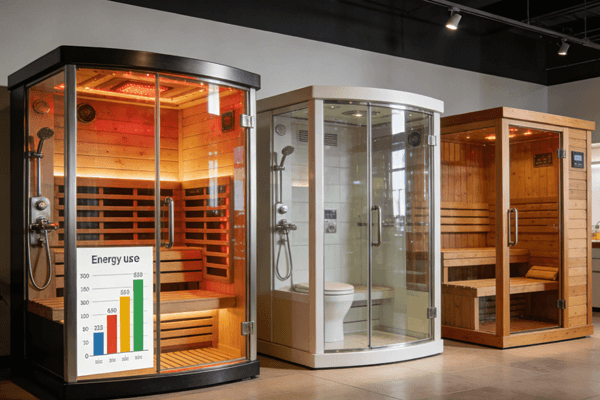
Infrared sauna vs traditional sauna: which is more energy-efficient?
| Type | Energy Use | Heat Experience |
|---|---|---|
| Infrared | Low | Direct body heat |
| Traditional | Medium | Hot air and steam |
Do outdoor saunas9 consume more electricity than indoor saunas?
Outdoor saunas face heat loss.
| Installation | Energy Effect |
|---|---|
| Indoor | Stable |
| Outdoor insulated | Slight increase |
| Outdoor poor insulation | High increase |
High-end outdoor sauna designs reduce this gap.
Is a commercial sauna more energy-efficient than expected?
Commercial saunas often show lower energy cost per user due to continuous use and better control systems.
How Can You Reduce Sauna Electricity Costs Without Sacrificing Heat?
Energy savings do not require lower comfort.
Smart design and controls reduce electricity use while keeping performance stable.
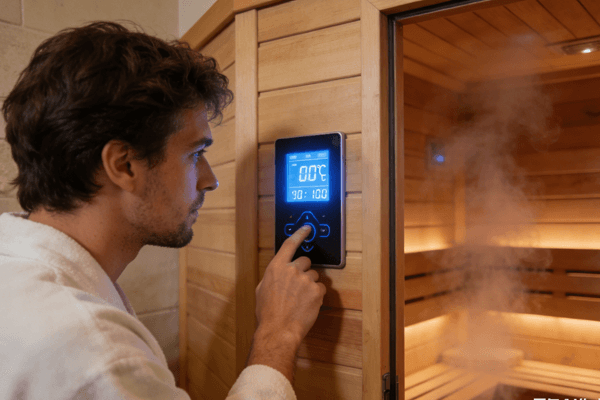
What temperature settings save the most electricity?
Each 5°C reduction can lower energy use by about 5–8%.
Does using a timer or smart controller lower sauna energy usage?
Timers prevent unnecessary heating. Smart controllers allow delayed start and automatic shut-off.
Can modern sauna heaters10 reduce power consumption?
Modern heaters cycle more efficiently and respond faster to temperature changes.
Is Sauna Electricity Usage Worth the Cost?
Energy cost should be weighed against long-term value.
For many users, sauna electricity cost is small compared to wellness benefits and property value.
Is using a sauna daily expensive in the long run?
Daily use increases consumption but often stays affordable for most households.
How does sauna energy cost compare to health benefits?
Many users report better sleep, muscle recovery, and stress reduction, which often reduces spending elsewhere.
Is a sauna still energy-efficient for hotels, gyms, or resorts?
Yes. In commercial projects, energy cost is spread across many users and becomes a small operating expense.
Frequently Asked Questions About Sauna Electricity Use
Does a sauna use a lot of electricity?
No. Most modern saunas use moderate and predictable power.
Can a sauna run on standard household power?
Small and infrared saunas often can. Larger saunas may need dedicated circuits.
Is it cheaper to use a sauna at night?
Off-peak electricity pricing can reduce cost in some regions.
Will a sauna significantly increase my electricity bill?
For most users, the increase is limited and manageable.
How much electricity does a sauna use per year?
Annual usage often ranges between 1,000 and 2,500 kWh depending on habits.
Conclusion
A sauna uses controlled electricity that depends on design, insulation, and usage habits. With modern heaters and smart planning, sauna energy cost remains predictable, manageable, and justified by long-term comfort, wellness value, and commercial return.
-
Exploring traditional electric saunas will provide insights into their efficiency and benefits. ↩
-
Explore the benefits of Infrared saunas to understand their unique advantages for health and wellness. ↩
-
Learn how to calculate Hourly Electricity Use for appliances to manage energy consumption effectively. ↩
-
Understanding the factors influencing electricity bills can help you manage costs effectively. ↩
-
Exploring efficient heaters can help you save on energy costs and improve sauna performance. ↩
-
Understanding how construction quality affects energy use can help you optimize your sauna for efficiency. ↩
-
Explore how better insulation can significantly lower energy costs and improve sauna performance. ↩
-
Explore the benefits of Infrared saunas to understand why they are energy-efficient and how they can enhance your wellness. ↩
-
Learn about the energy consumption differences between outdoor and indoor saunas to optimize your sauna experience. ↩
-
Learn about the advantages of modern sauna heaters and their impact on energy consumption. ↩