Skip to content
Choosing the wrong vanity size creates daily discomfort and layout waste. I have seen many projects fail because of small sizing errors that looked harmless on drawings.
Bathroom vanity cabinet dimensions1 define comfort, clearance, and usability. Correct sizing depends on room layout, sink type, and user needs rather than appearance alone.
I will explain real dimension rules, common mistakes2, and decision logic so sizing choices stay practical and low risk.
What Are the Standard Bathroom Vanity Cabinet Dimensions?
Wrong assumptions about “standard sizes3” cause fitting problems. I faced this many times when overseas buyers trusted catalog numbers without checking space limits.
Standard bathroom vanity cabinet dimensions follow fixed width, depth, and height ranges that suit most residential layouts and plumbing positions.
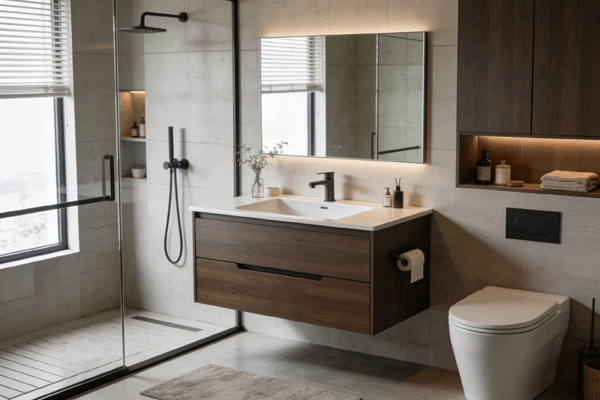
Typical standard size ranges
Standard production focuses on installation efficiency and supply stability.
| Dimension | Common Range |
|---|---|
| Width | 18–72 inches |
| Depth | 18–22 inches |
| Cabinet height | 32–36 inches |
| Finished height | 34–36 inches |
Standard sizing simplifies logistics and reduces error rates. But it does not solve every layout. In Holie projects, I often treat standard sizes as a starting point, not a final answer.
What Is the Most Common Bathroom Vanity Height in 2025?
Height affects comfort more than buyers expect. I learned this after repeated hotel feedback about back strain.
The most common bathroom vanity height4 in 2025 is 34–36 inches, measured from finished floor to countertop surface.
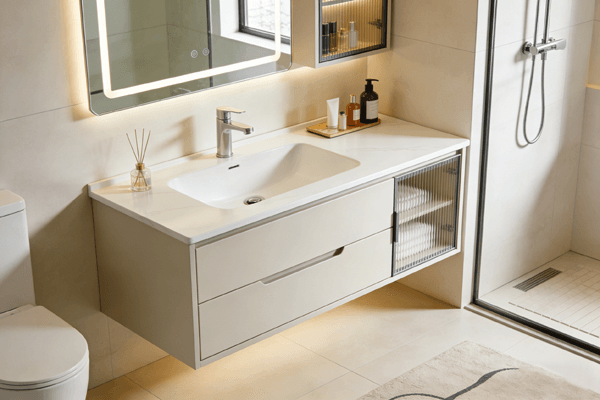
Why modern vanity heights5 increased
Average user height increased. Daily use comfort became more important.
| Vanity style | Finished height |
|---|---|
| Traditional | 32–33 inches |
| Modern residential | 34–36 inches |
| Hospitality projects | 34 inches |
A higher vanity reduces bending and wrist strain. This is why most new projects avoid old low standards.
How Deep Should a Bathroom Vanity Cabinet Be?
Depth mistakes reduce walking space fast. I have seen deep cabinets block doors and drawers.
Bathroom vanity cabinets6 are usually 20–22 inches deep to balance storage capacity and movement clearance.
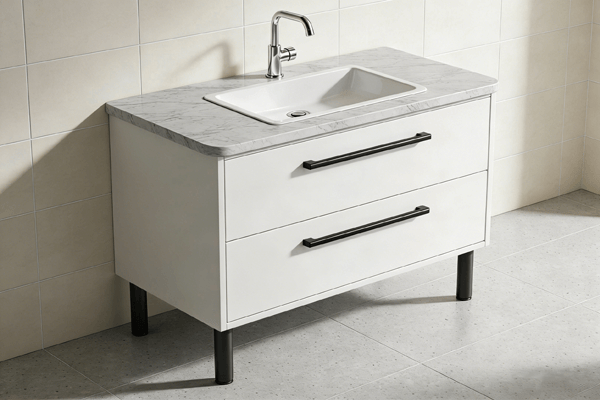
Depth selection logic
Depth must match room width and sink type.
| Depth | Suitable use |
|---|---|
| 18 inches | Small bathrooms |
| 20 inches | Standard layouts |
| 22 inches | Master bathrooms |
Shallower cabinets improve movement. Deeper cabinets increase storage. The choice depends on layout priority.
What Are Standard Single vs Double Sink Vanity Dimensions?
Sink count changes everything. I always confirm sink number first.
Single sink vanities range from 24–48 inches wide7, while double sink vanities typically start at 60 inches8.
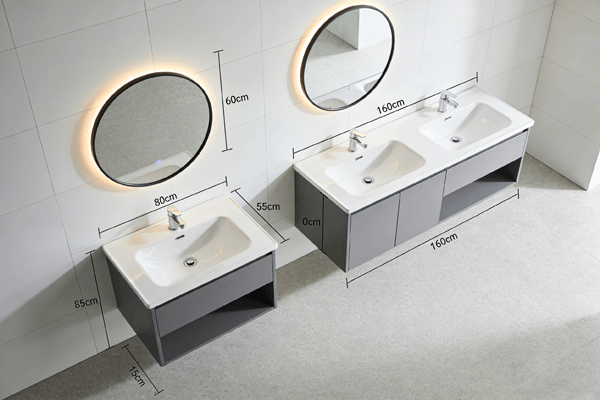
Width comparison
| Type | Width range |
|---|---|
| Single sink | 24–48 inches |
| Double sink | 60–84 inches |
Double sinks require better drawer planning and stronger cabinet frames. This affects cost and shipping volume.
How Do Bathroom Vanity Dimensions Differ by Bathroom Size?
Room size sets the limit. Vanity choice follows.
Bathroom vanity dimensions9 must scale with room size to preserve movement, safety, and cleaning access.
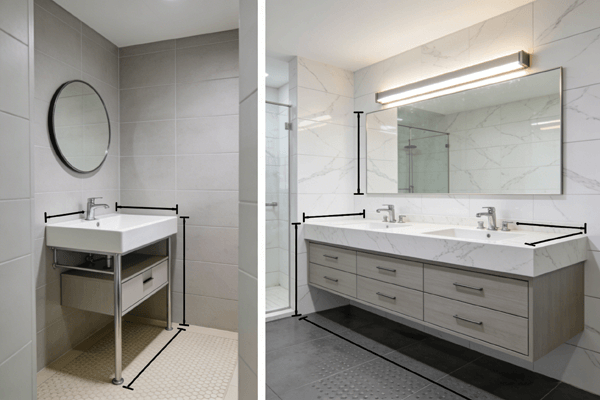
Size-based guidance
| Bathroom size | Vanity width |
|---|---|
| Small | 18–30 inches |
| Medium | 30–48 inches |
| Large | 60–84 inches |
Ignoring room scale creates crowding. I always map walking paths before confirming vanity width10.
What Vanity Cabinet Size Works Best for Small Bathrooms?
Small bathrooms expose mistakes immediately.
Vanities between 18–30 inches wide and 18–20 inches deep11 work best in small bathrooms.
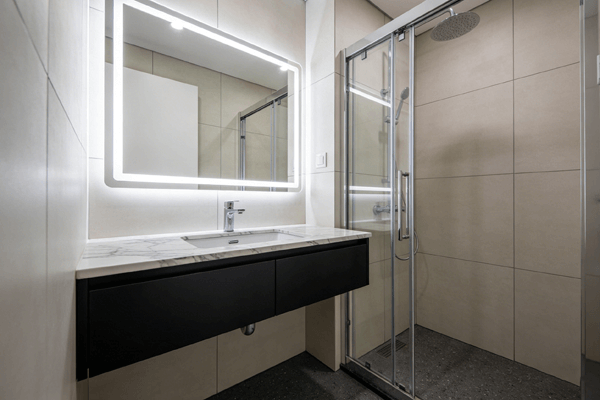
Space-saving strategies12
- Wall-mounted cabinets
- Integrated sinks
- Reduced drawer depth
These choices improve movement and visual space.
What Are the Ideal Vanity Dimensions for Master Bathrooms?
Master bathrooms allow comfort upgrades.
Master bathroom vanities13 perform best at 60–84 inches wide and 20–22 inches deep.

Comfort-focused layout
| Feature | Recommendation |
|---|---|
| Sink spacing | 30 inches |
| Counter depth | 22 inches |
| Height | 36 inches |
Luxury projects often require reinforced cabinet structures14 for stone countertops.
What Is the Minimum Clearance Required Around a Bathroom Vanity?
Clearance rules protect daily safety.
A minimum of 30 inches of clear floor space15 is required in front of a bathroom vanity.
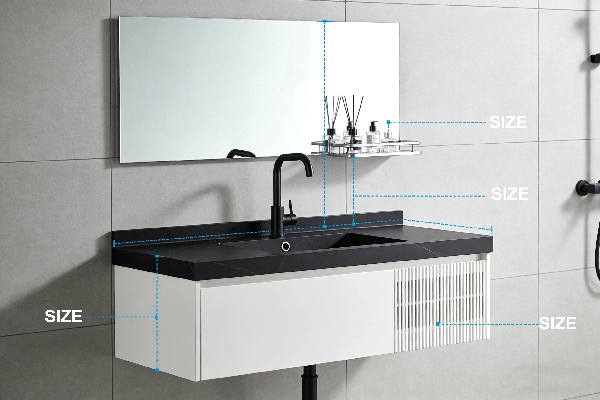
Clearance standards16
| Area | Minimum |
|---|---|
| Front | 30 inches |
| Side | 15 inches |
| Door swing | Full clearance |
Commercial inspections strictly enforce these limits.
How Do You Measure Bathroom Vanity Cabinet Dimensions Correctly?
Measurement errors cost money.
Accurate vanity measurement17 includes finished walls, flooring, plumbing centers, and countertop overhang.
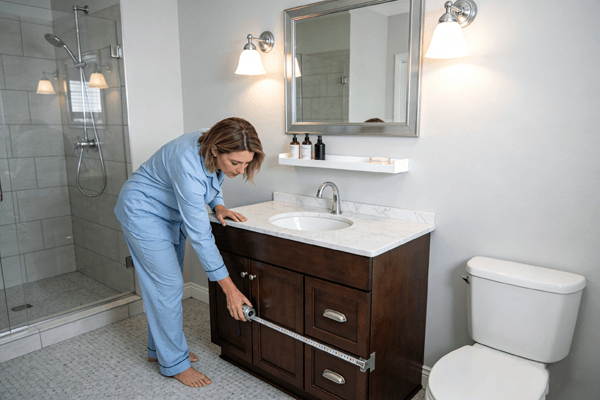
Measurement sequence
- Measure after tiling
- Confirm plumbing position18
- Allow top overhang
I always double-check measurements before production.
What Mistakes Do People Make When Measuring Vanity Cabinet Size?
The same errors repeat.
Common mistakes include measuring too early19, ignoring overhang, and skipping door clearance.
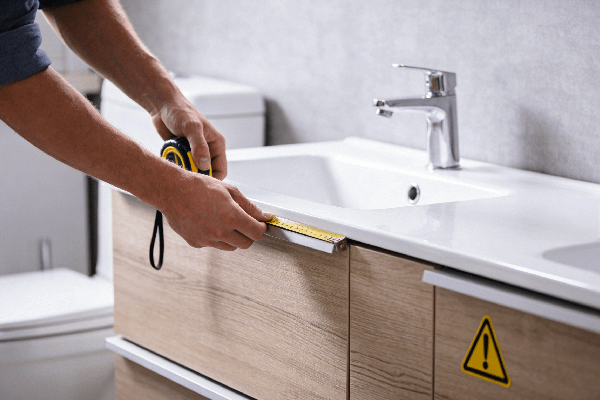
Frequent errors
| Mistake | Impact |
|---|---|
| Early measurement | Size mismatch |
| No overhang | Tight fit |
| Ignored plumbing | Rework |
These mistakes delay delivery and increase costs.
How Do Custom Bathroom Vanity Dimensions Compare to Standard Sizes?
Custom offers control.
Custom vanity dimensions20 provide exact fitting, improved storage layout, and better visual balance.
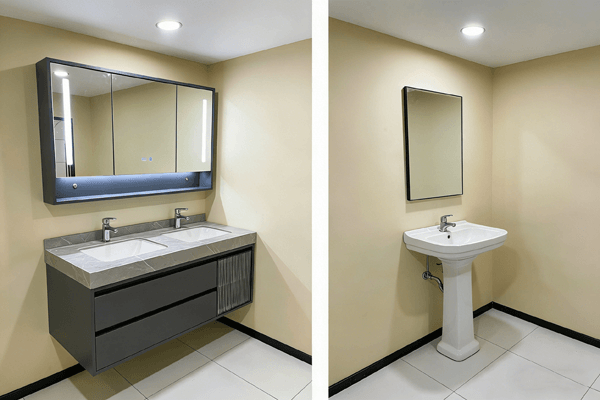
Standard vs custom
| Aspect | Standard | Custom |
|---|---|---|
| Fit | General | Exact |
| Lead time | Short | Longer |
| Cost | Lower | Higher |
Holie often balances both based on project volume.
When Should You Choose a Custom Vanity Cabinet Size?
Custom is not always needed.
Custom vanity sizes21 work best when layout limits, brand design, or user needs cannot match standard sizes.
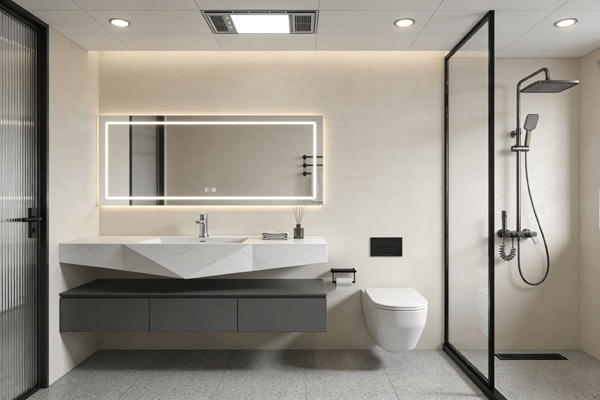
Best use cases
- Irregular rooms
- Luxury branding
- Hospitality projects
How Do Countertop Thickness and Sink Type Affect Vanity Dimensions?
Details change final height.
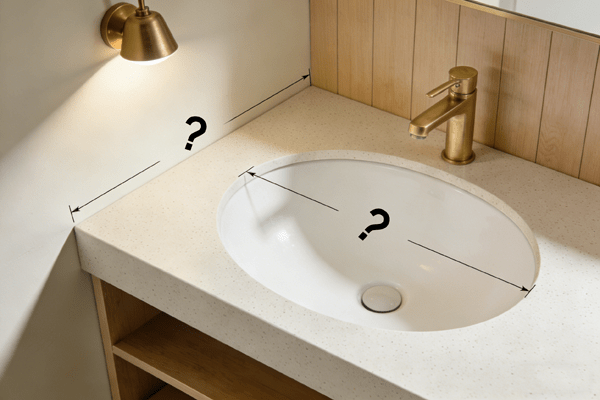
Countertop thickness22 and sink type can change finished vanity height by 1–3 inches.
Impact factors
| Element | Effect |
|---|---|
| Stone top | Adds height |
| Vessel sink | Raises bowl |
| Undermount | Cleaner lines |
Finished height matters more than cabinet height.
Do Wall-Mounted Vanities Have Different Dimension Standards?
Floating designs change perception.
Wall-mounted vanities23 follow similar width rules but allow flexible height installation.

Key benefits
- Adjustable height24
- Visual openness
- Easy cleaning
What Are the ADA-Compliant Bathroom Vanity Cabinet Dimensions?
Accessibility follows strict rules.
ADA-compliant vanities25 require reduced height, knee clearance26, and open access below the sink.

Core ADA limits
| Requirement | Standard |
|---|---|
| Max height | 34 inches |
| Knee clearance | 27 inches |
| Depth | 17–19 inches |
Public projects must follow these standards.
How Do Bathroom Vanity Dimensions Affect Comfort and Ergonomics?
Sizing affects posture.
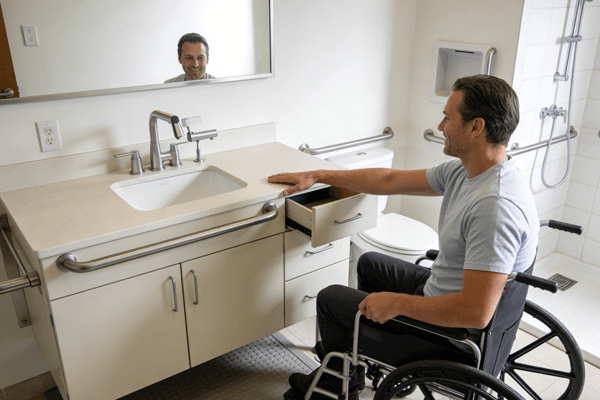
Correct vanity dimensions27 reduce bending, shoulder strain, and daily fatigue.
Ergonomic factors
| Factor | Effect |
|---|---|
| Height | Posture |
| Depth | Reach |
| Width | Shared use |
Are Bathroom Vanity Sizes28 Different for Residential vs Commercial Projects?
Yes, priorities differ.
Commercial vanities focus on durability and compliance29, while residential vanities focus on comfort and style.

Project differences
| Aspect | Residential | Commercial |
|---|---|---|
| Design | Flexible | Regulated |
| Structure | Light | Reinforced |
What Are the Most Asked Bathroom Vanity Dimension Questions?
Buyers repeat concerns.
Most questions focus on height comfort30, clearance rules, and sink spacing.
Common concerns
- Is 36 inches too high
- Can double sinks fit 60 inches31
- How much clearance is enough
How Do You Choose the Right Vanity Cabinet Size for Your Project?
Logic beats appearance.
The right vanity size comes from room size32, usage frequency, and long-term comfort goals.

Decision order
- Room size
- User needs
- Sink type
Bathroom Vanity Cabinet Dimensions33 Quick Reference Size Chart
Quick checks save time.
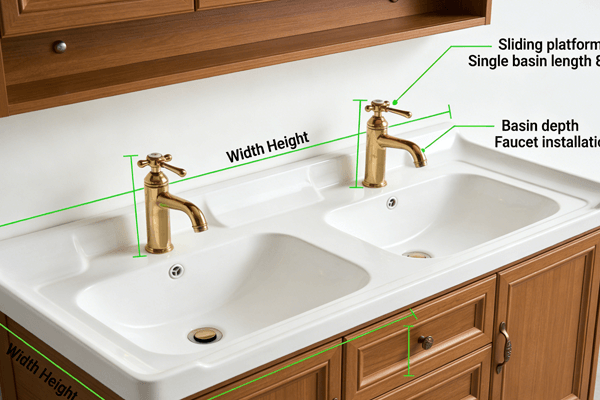
This chart summarizes common vanity sizes34 for fast comparison during planning.
| Use case | Width | Depth | Height |
|---|---|---|---|
| Small bath | 18–30 | 18–20 | 34 |
| Standard bath | 30–48 | 20–22 | 34–36 |
| Master bath | 60–84 | 20–22 | 34–36 |
Conclusion
Bathroom vanity cabinet dimensions affect comfort, movement, and long-term satisfaction. Correct sizing reduces rework, supports daily use, and protects budgets across residential and commercial bathroom projects.
-
Understanding standard dimensions helps ensure comfort and usability in your bathroom design. ↩
-
Learning about common mistakes can help you avoid costly errors in your bathroom renovation. ↩
-
Exploring common standard sizes helps avoid fitting problems and ensures efficient installation. ↩
-
Understanding the standard height can help you choose the right vanity for comfort and style. ↩
-
Exploring this trend can provide insights into design choices that enhance user comfort and functionality. ↩
-
Explore this link to understand the ideal dimensions for bathroom vanity cabinets, ensuring optimal space and functionality. ↩
-
Explore this link to understand the ideal dimensions for single sink vanities, ensuring a perfect fit for your bathroom. ↩
-
Check this resource to learn about double sink vanity dimensions, helping you choose the right size for your space. ↩
-
Understanding standard dimensions helps you choose the right vanity for your space, ensuring functionality and style. ↩
-
Exploring vanity width impacts can guide you in creating a balanced and efficient bathroom layout. ↩
-
Discover expert recommendations on vanity sizes that maximize space and functionality in small bathrooms. ↩
-
Explore innovative space-saving strategies that can transform your small bathroom into a more functional and stylish area. ↩
-
Explore this link to discover top-rated vanities that enhance both comfort and aesthetics in your master bathroom. ↩
-
Learn about the significance of reinforced cabinets to ensure durability and support for your stone countertops. ↩
-
Understanding the significance of this clearance can enhance safety and functionality in bathroom layouts. ↩
-
Exploring clearance standards helps ensure compliance with safety regulations and improves user experience. ↩
-
Understanding accurate vanity measurement is crucial for avoiding costly mistakes in your bathroom renovation. ↩
-
Confirming plumbing position is essential for a successful installation, ensuring everything fits perfectly. ↩
-
Understanding the impact of early measurements can help you avoid costly mistakes and ensure a perfect fit. ↩
-
Explore this link to understand how custom vanity dimensions can enhance your bathroom's functionality and aesthetics. ↩
-
Explore the advantages of custom vanity sizes to understand how they can enhance your space and meet specific needs. ↩
-
Understanding the impact of countertop thickness can help you choose the right vanity for your space. ↩
-
Understanding the dimensions of wall-mounted vanities can help you choose the right fit for your space. ↩
-
Exploring adjustable height features can enhance your bathroom's functionality and aesthetics. ↩
-
Exploring this link will provide insights into the advantages of ADA-compliant vanities, enhancing your understanding of accessibility. ↩
-
This resource will clarify the importance of knee clearance in bathroom design, ensuring compliance and comfort. ↩
-
Understanding the right vanity dimensions can significantly enhance your bathroom experience and comfort. ↩
-
Understanding the standard sizes can help you choose the right vanity for your space, ensuring functionality and style. ↩
-
Exploring this topic will reveal how these factors impact the longevity and safety of commercial spaces. ↩
-
Understanding height comfort can help you choose a vanity that enhances usability and accessibility in your bathroom. ↩
-
Exploring this topic will guide you in selecting the right vanity size for your needs, ensuring functionality and style. ↩
-
Room size significantly influences your choice of vanity cabinet, ensuring it fits well and meets your needs. ↩
-
Understanding standard dimensions helps in selecting the right vanity for your space. ↩
-
Exploring common vanity sizes can guide you in making informed decisions for your bathroom design. ↩