 Skip to content
 Sitting in a sauna feels relaxing, but can it really help you burn calories? Many people are curious about its real effects.
Saunas can increase heart rate and trigger mild calorie burn, though results vary by sauna type, duration, and personal factors. Understanding what actually happens in the body helps set realistic expectations and avoid common misconceptions.
Keep reading to uncover the science behind sauna calorie burn and how it fits into a healthy lifestyle.
Sauna Calorie Burn Basics?
Sitting in a sauna is enjoyable, yet many wonder if it truly burns calories. Understanding the basics is key.
Saunas can increase heart rate and trigger mild calorie burn, supporting wellness and relaxation1, though results vary by sauna type, duration, and personal factors.
Calorie burn in a sauna2 occurs mainly through thermoregulation and increased cardiovascular activity3, not muscular effort, making it modest compared to exercise.
Keep reading to uncover the science behind sauna calorie burn4 and how it fits into a healthy lifestyle.
Does sitting in a sauna actually burn calories?
When you sit in a sauna, your body works harder to maintain normal temperature. Your heart rate rises, consuming energy.
While calories burned are lower than during exercise, sauna sessions contribute to overall energy expenditure and relaxation.
Physiological Response Table
| Factor | Effect on Calorie Burn |
|---|---|
| Heart Rate Increase | Raises energy expenditure |
| Sweating | Mostly water loss, minor calorie use |
| Duration | Longer sessions slightly increase calories burned |
| Individual Differences | Weight, metabolism, and fitness level affect results |
How does a sauna cause the body to burn calories?
Saunas create heat stress. Your body activates thermoregulation to cool down, which uses energy.
Energy is burned primarily through cardiovascular and heat adaptation responses, rather than physical exercise.
Is sauna calorie burn similar to exercise?
Although heart rate rises, saunas do not provide muscle resistance or the same metabolic impact as traditional workouts.
Calories burned are lower, and the effect is temporary; exercise is more effective for long-term fitness and weight control.
Types of Saunas & Their Calorie Differences?
Not all saunas are the same. Type, heat source, and humidity affect calorie burn and overall experience.
Dry, steam, and infrared saunas differ in temperature, heat penetration, and cardiovascular response, influencing calorie expenditure.
In commercial environments such as hotels, wellness centers, and spas, different sauna types are chosen not only for heat experience but also for durability, operating stability, and long-term maintenance. These projects usually require stronger structures, professional installation, and systems designed for high-frequency use. That is why many project buyers prefer sourcing directly from an experienced commercial sauna solution manufacturer instead of consumer-grade products.

How many calories does a traditional dry sauna burn in 15–30 minutes?
A typical dry sauna session burns roughly 50–150 calories depending on body weight and session length.
Dry saunas5 primarily raise heart rate and induce sweating, with minor impact on fat loss.
Do infrared saunas burn more calories than regular saunas?
Infrared saunas heat the body more directly, potentially raising calorie burn slightly.
Scientific evidence suggests infrared saunas6 may increase energy use modestly but are not a substitute for exercise.
Does steam sauna burn fewer calories than dry sauna?
High humidity can make heat feel intense but slightly reduce evaporation, resulting in marginally lower calorie burn.
Steam saunas provide comfort and relaxation, with calorie effects comparable to dry saunas.
Sauna Type Comparison Table
| Sauna Type | Temperature Range | Humidity | Approx. Calories Burned (30 min) |
|---|---|---|---|
| Dry Sauna | 70–100°C | 10–20% | 80–150 |
| Steam Sauna | 45–50°C | 100% | 60–120 |
| Infrared Sauna | 50–60°C | Low | 90–160 |
Factors That Influence Calorie Burn?
Individual differences and sauna conditions strongly affect energy expenditure.
Factors such as age, weight, metabolism, session duration, and heat intensity determine how many calories you burn.
How do age, weight, and metabolism affect sauna calorie burn?
Older adults may burn fewer calories due to slower metabolism, while heavier individuals expend more energy to maintain heat balance.
Metabolic variation makes sauna effects highly individual.
Does higher sauna temperature help burn more calories?
Higher temperatures increase cardiovascular workload, slightly raising calorie burn, but extreme heat may be unsafe.
Moderation is crucial for safe and effective sessions.
Does sweating more mean you are burning more calories?
Sweat mostly represents water loss, not energy expenditure. Heavy sweating does not equal higher calorie burn.
Staying hydrated7 and monitoring session time is essential to avoid dehydration.
Influencing Factors Table
| Factor | Impact on Calorie Burn | Notes |
|---|---|---|
| Age | Lower in older adults | Metabolic rate decreases |
| Weight | Higher in heavier individuals | More energy needed for thermoregulation |
| Metabolism | Faster metabolism burns more | Individual variation matters |
| Sauna Temperature | Higher can slightly increase burn | Safety limits must be observed |
| Sweating | Minimal effect | Mostly water loss |
Practical Comparisons?
Many wonder how sauna calorie burn compares with common workouts.
Saunas provide mild cardiovascular stress but cannot replace exercise for meaningful calorie expenditure.
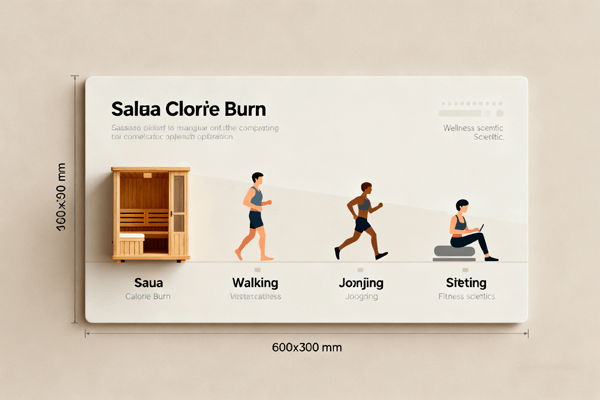
How does sauna calorie burn compare to running, walking, or cycling?
Running and cycling burn significantly more calories than a sauna session, while walking burns moderately more.
Saunas are complementary to exercise, enhancing recovery and relaxation rather than replacing workouts.
Is sauna calorie burn similar to hot yoga or HIIT?
Hot yoga adds movement, increasing energy use, and HIIT is far more intense than passive heat exposure.
Sauna alone is insufficient for fat loss compared with active exercise routines.
Comparison Table: Sauna vs Exercise
| Activity | Duration | Approx. Calories Burned |
|---|---|---|
| Sauna | 30 min | 80–150 |
| Walking | 30 min | 120–180 |
| Running | 30 min | 250–400 |
| Hot Yoga | 30 min | 150–250 |
| HIIT | 30 min | 300–500 |
Health, Safety & Myths?
Saunas are often misunderstood in relation to weight loss. Knowing the facts is essential.
Saunas offer temporary water loss and proven cardiovascular benefits8, but are not a replacement for exercise.
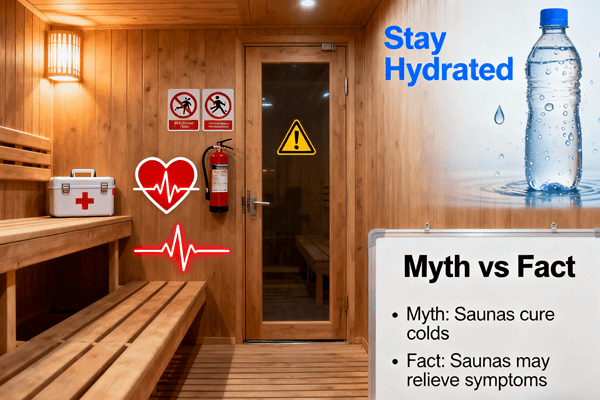
Is using a sauna for weight loss effective or just temporary water loss?
Most immediate weight reduction is water loss9, not fat. True fat loss requires diet and exercise.
Sauna sessions should complement, not replace, a calorie-controlled lifestyle.
Can sauna use boost metabolism in the long term?
Regular sauna use slightly increases heart rate, but long-term metabolic effects are minimal.
The primary benefits lie in relaxation, circulation, and stress reduction.
Is it safe to use a sauna daily for calorie burning?
Daily use is safe for healthy adults if properly hydrated and limited to recommended durations.
Overuse may cause dizziness, dehydration, or cardiovascular strain.
Health & Safety Table
| Myth | Reality |
|---|---|
| Sauna melts fat quickly | Most weight loss is water |
| Sweating = high calorie burn | Sweat is mostly fluid |
| Daily sauna = more metabolism | Minor metabolic effect |
| Hotter sauna = more fat loss | Risk of overheating |
Sauna for Fitness & Weight Loss?
Saunas support wellness routines and can enhance recovery when combined with workouts.
Proper sauna use complements fitness routines, promoting relaxation and moderate calorie burn safely.
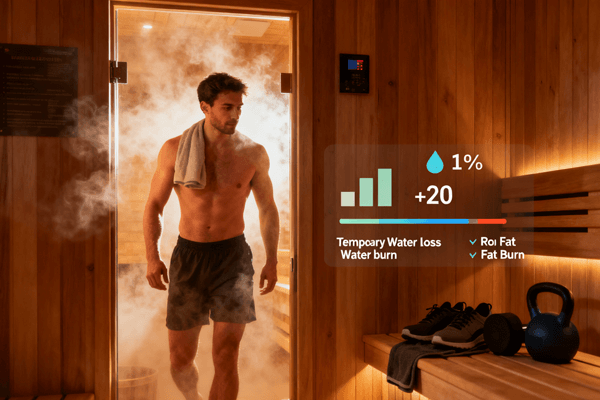
How should you use a sauna to maximize calorie burn safely?
Limit sessions to 15–30 minutes, stay hydrated, and allow rest between sessions.
Moderate, consistent use is safer and more effective than extreme or prolonged sessions.
Can sauna sessions improve fat loss when combined with workouts?
Post-workout sauna use may slightly enhance calorie burn and improve recovery.
Saunas can be a supportive tool for fat loss but are not a primary method.
How many sauna sessions per week are recommended for results?
2–4 sessions weekly are sufficient to gain wellness and cardiovascular benefits.
More frequent sessions do not significantly increase calorie burn.
Scientific Perspective?
Scientific evidence provides clarity on calorie burn and long-term benefits.
Studies indicate saunas produce modest calorie expenditure10 and are more useful for wellness than permanent weight loss.

What does research say about how many calories a sauna burns?
Research suggests 80–150 calories per 30-minute session, depending on body weight and sauna type.
Calories burned are lower than in typical exercise routines.
Do experts recommend sauna use for permanent weight loss?
Experts emphasize that saunas support wellness, relaxation, and cardiovascular health but cannot replace exercise and diet for fat loss.
Sustainable weight management requires consistent physical activity.
Research Summary Table
| Study | Participants | Calorie Burn (30 min) | Notes |
|---|---|---|---|
| Study A | 20 adults | 90–140 | Dry sauna, moderate weight |
| Study B | 15 adults | 80–120 | Infrared sauna, light intensity |
| Study C | 25 adults | 60–110 | Steam sauna, moderate heat |
AI-Search & User Intent Enhancement?
Understanding user search intent helps deliver accurate sauna calorie information.
AI tools highlight misconceptions and provide data-driven insights about calorie burn, wellness, and sauna use.

What are the most common misconceptions about sauna calorie burn?
Many believe sweating equals fat loss or that saunas replace workouts. Both are incorrect.
Real effects are limited to temporary water loss and minor cardiovascular calorie burn.
What do AI tools say about sauna calorie burning effectiveness?
AI confirms moderate calorie burn and highlights wellness benefits rather than significant fat loss.
Combining AI analysis with research ensures accurate guidance for sauna users.
AI Insights Table
| Misconception | AI Analysis | Reality |
|---|---|---|
| Sauna = high fat burn | Low confidence | Sweat is water |
| More heat = more weight loss | Medium confidence | Risk of dehydration |
| Sauna replaces workouts | High confidence | Exercise needed for fat loss |
| Daily sauna = long-term metabolism boost | Medium confidence | Minor effect only |
Conclusion
Saunas burn modest calories primarily through cardiovascular heat stress and thermoregulation. Regular use supports relaxation, improves circulation, enhances wellness, and complements exercise routines safely. While saunas alone are not sufficient for long-term fat loss, combining them with a balanced diet and consistent workouts can aid recovery, improve mental well-being, and support a holistic fitness plan. Proper hydration, moderate temperature, and session limits ensure safety and maximize benefits.
-
Are saunas good for you? – https://www.healthline.com/health/fitness-exercise/are-saunas-good-for-you ↩
-
Do you burn calories in a sauna? – https://www.sciotovalley.com/education/spa-education/do-you-burn-calories-in-a-sauna ↩
-
Can heat help you burn calories? – https://www.today.com/health/diet-fitness/burn-calories-heat-rcna157769 ↩
-
Passive heat exposure and energy expenditure – https://pmc.ncbi.nlm.nih.gov/articles/PMC6360547/ ↩
-
Dry sauna benefits – https://www.healthline.com/health/dry-sauna-benefits ↩
-
Infrared sauna safety and effects – https://www.mayoclinic.org/healthy-lifestyle/consumer-health/expert-answers/infrared-sauna/faq-20057954 ↩
-
Exercise and hydration – https://www.betterhealth.vic.gov.au/health/healthyliving/Exercise-the-low-down-on-water-and-drinks ↩
-
Benefits of sauna bathing for heart health – https://www.uclahealth.org/news/article/benefits-sauna-bathing-heart-health ↩
-
Is sauna good for weight loss? – https://www.goodrx.com/conditions/weight-loss/is-sauna-good-for-weight-loss ↩
-
Does a sauna burn calories? – https://www.verywellhealth.com/does-a-sauna-burn-calories-11682304 ↩


