 Skip to content
 In my 15 years working with wellness projects, I’ve seen dozens of commercial steam rooms fail due to the same mistakes. From small hotel installations to luxury resorts, poor planning is always the culprit. Many steam rooms fail because basic rules are ignored. I have seen leaks, weak steam, and mold appear within one year. These problems usually start from poor planning and wrong technical decisions.
A proper steam room requires correct sizing, material selection, steam power calculation, waterproofing, and ventilation design. In our team, we always start with a full audit of the site and user requirements. I can tell you, skipping even one of these steps leads to headaches down the line. When these elements work together, the steam room remains safe, comfortable, and durable.
If you plan to build a steam room for a home, hotel, spa, or resort, I recommend understanding each step clearly before construction begins.
- Steam rooms require proper technical planning before construction.
- Steam generator sizing directly affects steam performance and safety.
- Waterproofing and drainage are essential to prevent structural damage.
- Residential and commercial steam rooms require different equipment standards.
A well-designed steam room can last for many years with minimal problems when key construction rules are followed.
What Do You Need to Consider Before Building a Steam Room?
Building a steam room is not just about installing a steam generator. The project starts with correct planning. I always say that wrong decisions made early are the hardest to fix later.
Before construction begins, usage type, technical limits, and the differences between steam rooms and saunas must be clearly understood.
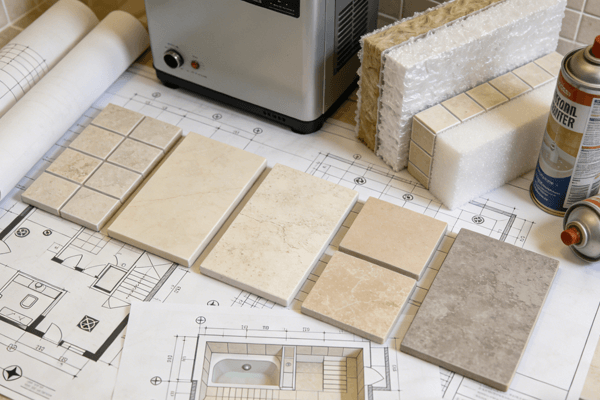
Is a Steam Room Suitable for Residential and Commercial Use?
Steam rooms work well for both homes and commercial projects, but the design logic changes. I often explain this to buyers working on hotel and resort developments.
Residential steam rooms are used a few times per day. Commercial steam rooms may run continuously. This affects generator size, materials, and maintenance cycles. From my experience, using residential-grade equipment in commercial hotels almost always results in early failure. I’ve had clients learn this the hard way before we stepped in to fix it.
| Item | Residential | Commercial |
|---|---|---|
| Usage frequency | Low | High |
| Generator duty | Light | Heavy |
| Certification | Optional | Required |
| Maintenance | Low | Regular |
Using residential-grade equipment in commercial projects often leads to early failure.
What Are the Key Differences Between a Steam Room and a Sauna?
Many buyers confuse steam rooms with saunas. I always clarify this early in the design stage.
Steam rooms operate at very high humidity and lower temperatures. Saunas use dry heat and higher temperatures. These differences change construction requirements completely.
| Feature | Steam Room | Sauna |
|---|---|---|
| Humidity | 95–100% | 10–20% |
| Temperature | 40–50°C | 70–100°C |
| Waterproofing | Mandatory | Limited |
| Drainage | Required | Optional |
Ignoring these differences often causes structural damage.
How Much Space Is Required to Build a Steam Room Properly?
Steam rooms do not need to be large, but space must be planned carefully. Very small rooms overheat fast. Very large rooms waste energy.
From my experience, I’ve seen small miscalculations in space planning lead to uneven steam and unhappy users.
Proper space planning ensures even steam flow and comfortable seating.
| Project Type | Typical Size |
|---|---|
| Home | 1.2–2.0 m² |
| Spa | 3.0–6.0 m² |
| Hotel | Custom |
At Holie, layout optimization is always part of the design phase.
How Big Should a Steam Room Be for Optimal Performance?
Steam room size affects comfort, energy use, and generator lifespan. I have seen many projects overspend due to incorrect volume calculations.
Correct size calculation ensures stable steam production and long-term efficiency.
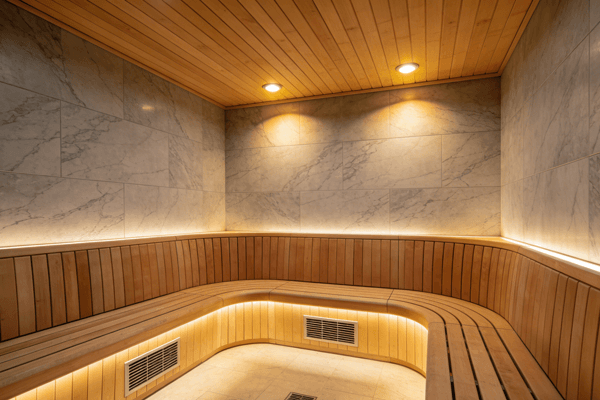
How Do You Calculate Steam Room Volume Correctly?
Basic volume is length × width × height. However, material type changes the effective volume.
I’ve learned that ignoring glass or stone surfaces almost always results in weak steam in commercial projects.
Glass and stone surfaces increase heat loss3. This must be added to the calculation.
| Surface Type | Adjustment |
|---|---|
| Ceramic tile | No change |
| Glass wall | +1.5 m³ |
| Natural stone | +20% |
Ignoring these factors results in weak steam.
Does Ceiling Height Affect Steam Room Efficiency?
Ceiling design is critical. Flat ceilings cause water dripping. This makes users uncomfortable.
I always recommend sloped ceilings to direct condensation toward the walls.
| Ceiling Type | Result |
|---|---|
| Flat | Poor comfort |
| Sloped | Good comfort |
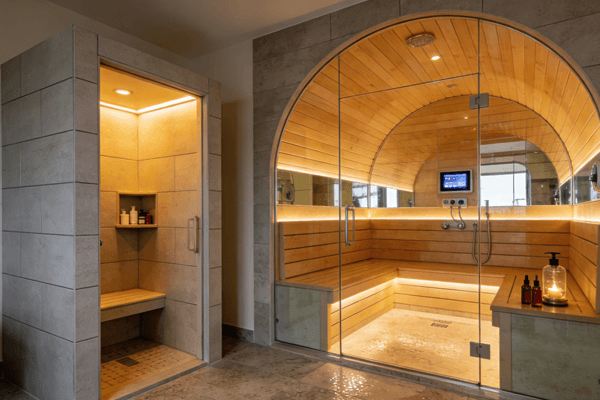
| Dome | Best performance |
This improvement costs little but improves experience greatly.
What Steam Room Size Works Best for Hotels, Spas, or Homes?
There is no single ideal size. Usage pattern matters most.
| Location | Ideal Capacity |
|---|---|
| Home | 2–4 people |
| Spa | 6–8 people |
| Resort | 8–12 people |
Oversizing increases operating cost without real benefit.
How Do You Choose the Right Steam Generator for Your Steam Room?
The steam generator is the core system. Most performance issues come from wrong generator selection. In projects I’ve handled, even a small miscalculation in generator sizing caused complaints from hotel guests. We always double-check volume, surface materials, and usage patterns before quoting.
Generator power must match room volume, materials, and usage frequency.
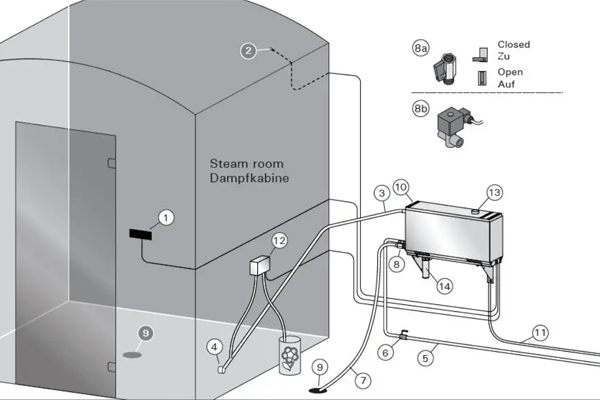
How Much Power Does a Steam Generator Need Per Cubic Meter?
A simple rule is 1 kW per cubic meter for tiled rooms4. Adjustments are required for glass or stone.
| Condition | Power Needed |
|---|---|
| Standard tile | 1.0 kW/m³ |
| Glass surfaces | 1.2–1.5 kW/m³ |
| Stone finishes | 1.3 kW/m³ |
This calculation is always confirmed before quotation.
What Happens If the Steam Generator Is Undersized or Oversized?
Both situations cause problems.
| Issue | Result |
|---|---|
| Undersized | Slow steam, complaints |
| Oversized | Energy waste, cycling |
Balanced sizing protects both comfort and equipment.
Should You Choose a Residential or Commercial Steam Generator?
The choice depends on usage hours.
| Generator Type | Recommended Use |
|---|---|
| Residential | Private homes |
| Commercial | Hotels and spas |
Commercial generators are built for long daily operation.
What Materials Are Best for Building a Steam Room?
Material selection defines durability. Steam slowly damages unsuitable materials.
Our team has tested dozens of tiles and stones over the years; cutting corners here usually leads to mold or corrosion within the first year.
Only moisture-resistant and non-porous materials5 should be used. Our team has tested different tile and stone options over the years. I can say with confidence that cutting corners here almost always leads to mold or corrosion within the first year.
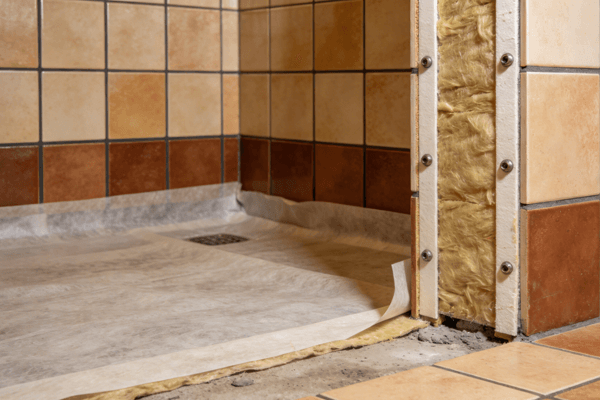
What Wall and Ceiling Materials Can Withstand Steam and Heat?
Tile and stone are proven solutions. Painted drywall is never suitable.
| Material | Suitability |
|---|---|
| Ceramic tile | Excellent |
| Natural stone | Good |
| Painted board | Not suitable |
Why Is Waterproofing Critical in Steam Room Construction?
Waterproofing6 is more important than surface finish. Steam penetrates joints and screws.
| Failure Point | Damage |
|---|---|
| No membrane | Mold |
| Poor sealing | Wall decay |
Most long-term failures start here.
Are Tiles, Stone, or Panels Better for Steam Rooms?
Each option has benefits.
| Finish | Advantage | Risk |
|---|---|---|
| Tile | Easy cleaning | Grout care |
| Stone | Luxury | Cost |
| Panels | Fast install | Limited style |
Commercial projects often choose tile for reliability.
How Should Steam Pipes and Water Inlets Be Installed?
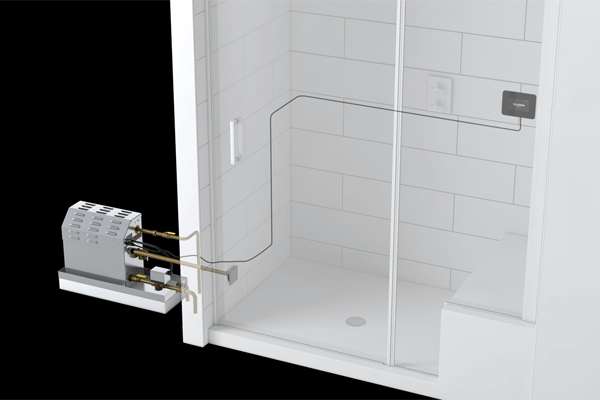
Pipe layout affects steam quality7 and safety.
Poor installation causes water spit and noise.
Where Should the Steam Outlet Be Positioned?
The outlet should be low and away from seating.
| Position | Reason |
|---|---|
| 150–300 mm above floor | Safe diffusion |
Why Must Steam Pipes Be Insulated?
Insulation prevents heat loss and condensation.
| Pipe Type | Result |
|---|---|
| Insulated | Dry steam |
| Uninsulated | Wet steam |
What Pipe Diameter Is Recommended for Steam Rooms?
Pipe size must match generator output.
| Generator Size | Pipe Diameter |
|---|---|
| Small | DN15 |
| Medium | DN20 |
| Large | DN25 |
How Do You Design Proper Ventilation and Drainage for a Steam Room?
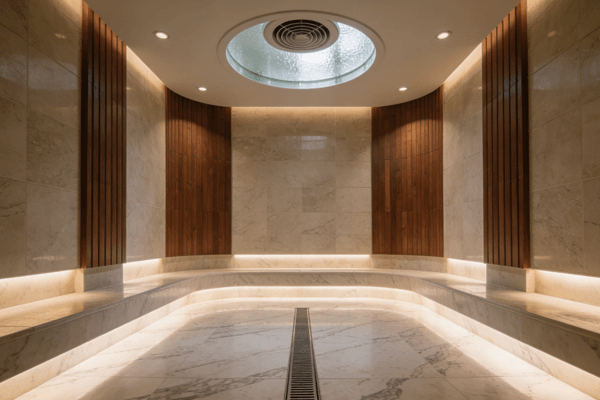
Ventilation protects both users and structure.
Without airflow8, mold forms quickly.
Does a Steam Room Need Mechanical Ventilation?
Mechanical ventilation is strongly recommended for commercial projects.
| System | Use |
|---|---|
| Natural | Small homes |
| Mechanical | Hotels, spas |
Where Should the Drain Be Located Inside a Steam Room?
The drain should sit at the lowest point.
| Drain Type | Benefit |
|---|---|
| Floor drain | Easy cleaning |
What Problems Are Caused by Poor Steam Room Ventilation?
Poor ventilation leads to odor, mold, and corrosion.
| Problem | Impact |
|---|---|
| Mold | Health risk |
| Corrosion | High repair cost |
What Lighting and Control Systems Work Best in a Steam Room?
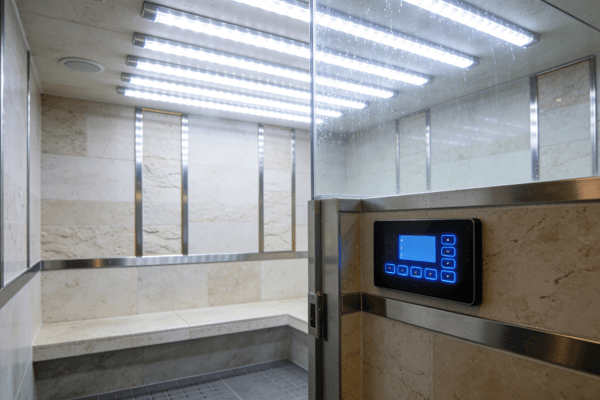
Lighting and controls must handle heat and moisture.
Incorrect products fail quickly.
What Type of Lighting Is Safe for Steam Rooms?
Only sealed, waterproof lighting should be used.
| Light Type | Suitability |
|---|---|
| IP65 LED9 | Safe |
| Standard LED | Unsafe |
Should Steam Room Controls Be Installed Inside or Outside?
Controls must be accessible and protected.
| Location | Benefit |
|---|---|
| Outside | Durability |
| Inside | Convenience |
Can Smart Controls Improve Steam Room Energy Efficiency?
Smart controls reduce waste and simplify operation.
| Feature | Benefit |
|---|---|
| Timer | Energy saving |
| Remote access | Easy management |
How Do You Ensure Safety and Comfort in a Steam Room?
Safety protects both users and business reputation.
In my projects, I always emphasize that stable temperature and humidity is what separates a good steam room from a problematic one.
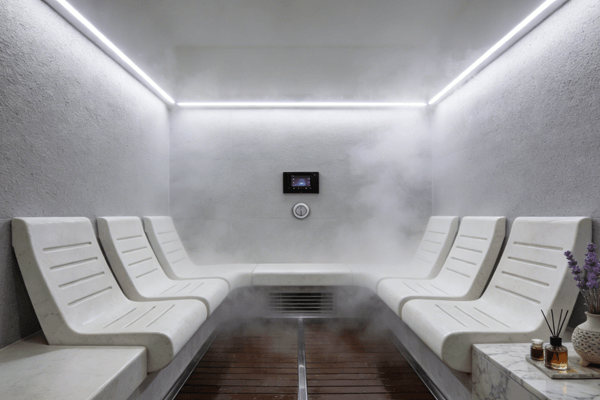
Comfort depends on stable temperature and humidity.
What Temperature and Humidity Levels Are Safe?
| Factor | Range |
|---|---|
| Temperature | 40–50°C |
| Humidity | 95–100% |
How Can You Prevent Mold and Moisture Damage?
Daily drying and regular cleaning are essential.
| Action | Effect |
|---|---|
| Ventilation | Dry surfaces |
| Cleaning | No odor |
What Common Steam Room Installation Mistakes Should Be Avoided?
| Mistake | Result |
|---|---|
| Flat ceiling | Dripping |
| Wrong generator | Poor steam |
| Cheap materials | Early failure |
How Much Does It Cost to Build a Steam Room?
Cost10 depends on size and specification.
Design decisions affect both build and operating cost.
What Factors Affect the Cost of Building a Steam Room?
| Factor | Impact |
|---|---|
| Size | High |
| Materials | Medium |
| Generator | High |
Is a Custom-Built Steam Room More Expensive Than a Prefab One?
| Type | Cost | Flexibility |
|---|---|---|
| Prefab | Lower | Limited |
| Custom | Higher | High |
How Can You Reduce Long-Term Maintenance Costs?
| Method | Benefit |
|---|---|
| Quality materials | Fewer repairs |
| Correct sizing | Longer lifespan |
Is It Better to Build a Steam Room Yourself or Hire a Professional?
Project scale determines the answer.
Large projects require experience.
For hotel, spa, and resort projects, steam rooms often operate for long hours with high user frequency. In these cases, structure strength, material stability, and system reliability become critical. This is why many developers prefer working with an experienced commercial sauna manufacturing partner who understands both steam room construction and commercial-grade sauna integration, rather than relying on residential solutions.
When Is DIY Steam Room Installation Not Recommended?
| Project | Advice |
|---|---|
| Hotel | Hire professionals |
| Home | DIY possible |
What Should You Look for in a Steam Room Supplier or Manufacturer?
| Criteria | Reason |
|---|---|
| Certification | Safety |
| Experience | Reliability |
| Support | Long-term use |
Holie focuses on full-system solutions rather than single products.
How Long Does It Take to Build a Steam Room from Start to Finish?
| Project Type | Timeline |
|---|---|
| Home | 2–4 weeks |
| Hotel | 4–8 weeks |
Conclusion
Based on my experience working on both residential and resort projects, the steam rooms that follow these principles almost never face major issues.
I can confidently tell clients that investing in upfront planning and proper materials saves significant maintenance costs down the line.
Building a steam room properly requires careful planning, correct size calculation, reliable materials, proper waterproofing, and correct steam system design. When each step is handled professionally, steam rooms deliver long-term comfort, safety, and value for both residential and commercial projects.
-
Sauna health benefits study – https://www.mayoclinicproceedings.org/article/s0025-6196(18)30275-1/fulltext ↩
-
Health benefits of steam rooms – https://www.webmd.com/balance/health-benefits-of-steam-rooms ↩
-
Heat losses and steam system considerations – https://www.spiraxsarco.com/learn-about-steam/steam-distribution/air-venting-heat-losses-and-a-summary-of-various-pipe-related-standards?sc_lang=en-GB ↩
-
How to build a steam room – https://www.harvia.com/en/ideas-and-trends/products/how-to-build-a-steam-room/ ↩
-
Wall materials for steam showers – https://blog.mrsteam.com/what-wall-materials-can-you-use-in-a-steam-shower ↩
-
Membranes in steam showers waterproofing guide – https://tcnatile.com/wp-content/uploads/2022/08/Membranes-in-Steam-Showers-_-Revised.pdf ↩
-
Steam piping design considerations – https://mecsengineering.com/key-considerations-for-optimal-steam-piping-design/ ↩
-
Sauna ventilation system explanation – https://alphasauna.com/sauna-ventilation-system-why-90-of-saunas-use-it/ ↩
-
Waterproof IP rating explanation – https://www.ledlightexpert.com/waterproof-ip-rating?srsltid=AfmBOopvuEJ4heZeP2vw-IPtIgYZQh-X9Y3WSVTT5OheXLvSkvWy8rwP ↩
-
Steam room construction cost discussion – https://www.reddit.com/r/Homebuilding/comments/10tzfkp/cost_of_steam_room_in_master_shower_during/ ↩


